“`html
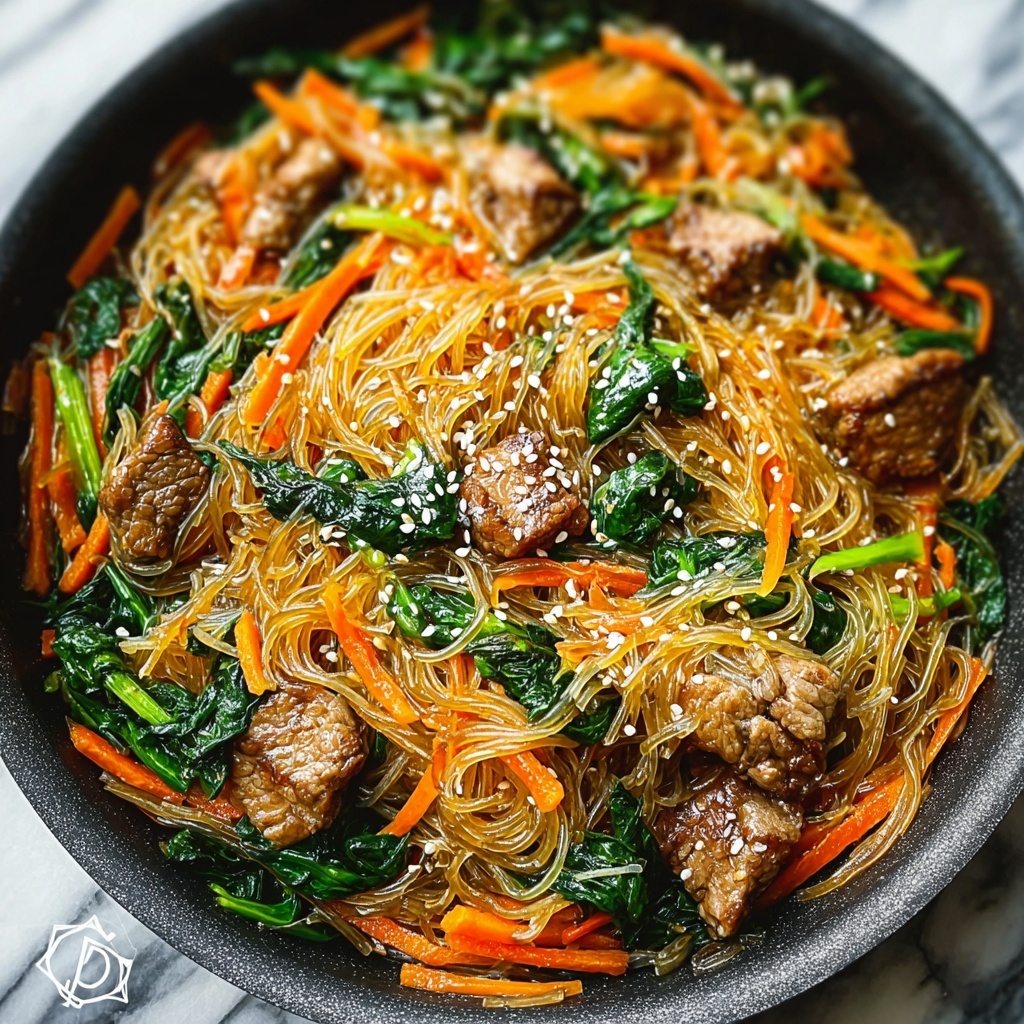
If you’ve ever experienced the vibrant world of Korean cuisine, you know there’s something truly magical about Japchae, a delightful glass noodle dish that bursts with color, flavor, and heartwarming comfort. This Japchae (Korean Glass Noodle Stir-Fry) Recipe blends tender beef, silky sweet potato noodles, and a rainbow of sautéed vegetables, all tossed in a perfectly balanced sweet and savory sauce. It’s not only a feast for your taste buds but also a dish that feels like a loving hug from the inside out—simple to make, nourishing, and endlessly satisfying.
Ingredients You’ll Need
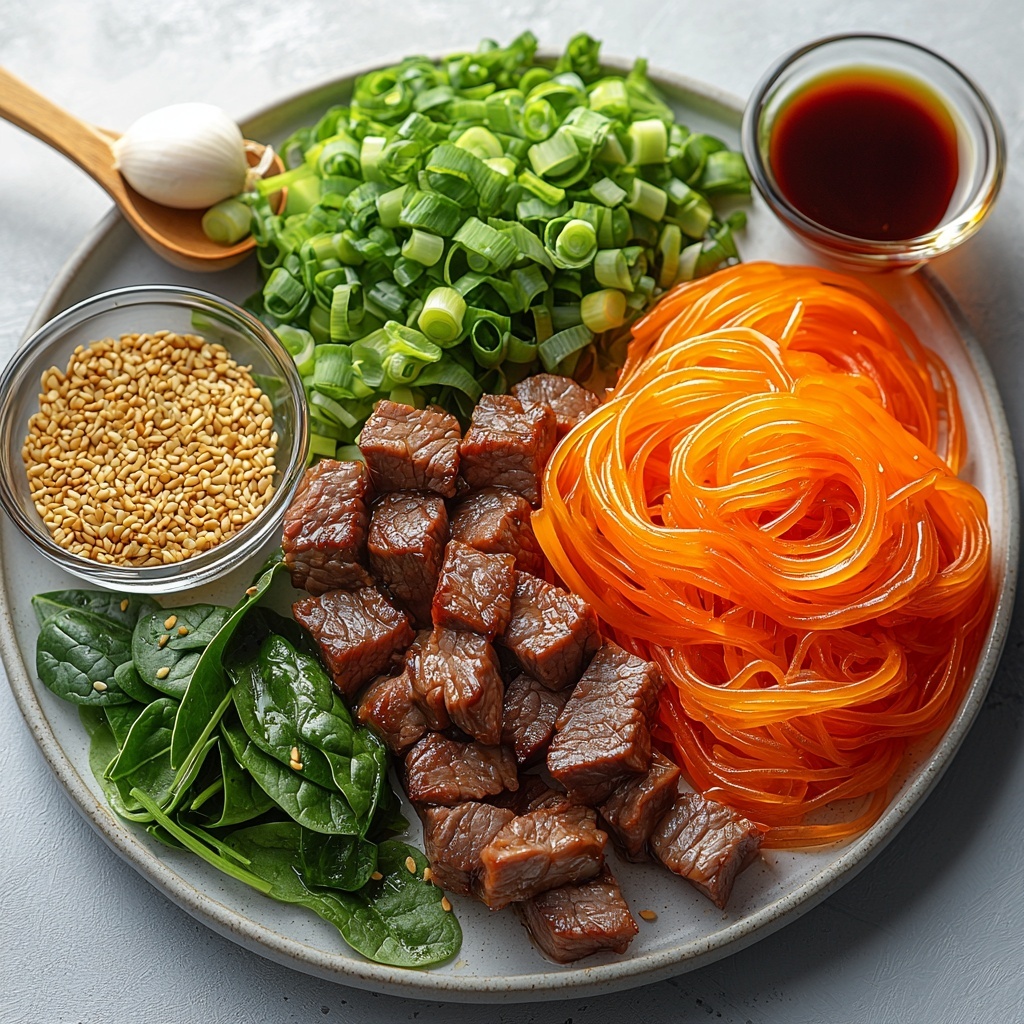
The beauty of this Japchae (Korean Glass Noodle Stir-Fry) Recipe lies in its straightforward ingredients that come together to create layers of texture and flavor. Each component plays a crucial role—from the chewy sweet potato noodles providing that signature glassy texture, to the fresh vegetables offering crunch and sweetness, and the soy sauce mixture lending that irresistible umami punch.
- Thin-sliced beef (2 lb): Choose tender cuts like sirloin or ribeye for the most flavorful and juicy meat.
- Korean sweet potato noodles, aka glass noodles (1 lb): These translucent noodles soak up the sauce beautifully and bring a unique chewiness.
- Carrots (3 medium, julienned): Adds a subtle sweetness and vibrant orange color.
- White onion (1 large, thinly sliced): Provides mild sharpness and crunch when sautéed.
- Green onions (1/2 bunch, chopped): Fresh, pungent notes that brighten the dish.
- Garlic cloves (6, minced): Infuses the stir-fry with an irresistible aroma and depth.
- Spinach leaves (1/2 lb): Offers mild bitterness and gorgeous green bursts of color.
- Sesame oil (4 tablespoons): A signature nutty flavor that ties all ingredients together.
- Olive oil (1 tablespoon): Helps keep the noodles from sticking while cooking.
- Soy sauce (6 tablespoons): The salty backbone that enriches every bite.
- Brown sugar (3 tablespoons): Balances salty with a touch of caramelized sweetness.
How to Make Japchae (Korean Glass Noodle Stir-Fry) Recipe
Step 1: Prepare and Cook the Sweet Potato Noodles
Start by bringing a pot of water to boil, adding a splash of olive oil to prevent sticking. Drop the Korean sweet potato noodles in and cook for about 5 to 6 minutes until tender but still with a slight chew. Drain them well, and set aside; these glass noodles are the star texture of Japchae, so treating them right ensures the best mouthfeel.
Step 2: Brown the Beef and Season
While the noodles are cooking, get a skillet hot on high heat and sear the thin-sliced beef until browned and cooked through. Half of your soy sauce, sesame oil, and brown sugar go into the pan here, flavoring the beef deeply with that signature sweet-savory glaze. Once done, remove the beef and keep it warm while you move on to the veggies.
Step 3: Sauté the Carrots and Onions
In a separate skillet over medium heat, toss your carrots and thinly sliced onions in, cooking until they soften just enough to release their natural sweetness without losing their bite. This step builds a foundation of flavor and texture, adding freshness and balance to the dish.
Step 4: Flavor the Vegetables
Next, add the remaining soy sauce, sesame oil, brown sugar, minced garlic, and chopped green onions to the skillet with your sautéed veggies. Stir everything together, letting the fragrance of garlic and the combination of salty and sweet mingle for about a minute. It’s these aromatics that give Japchae its signature depth.
Step 5: Wilt the Spinach
Finally, toss in the fresh spinach leaves and cook just until they’re wilted and tender. The spinach adds a beautiful green contrast and a gentle earthiness that rounds out the flavors perfectly.
Step 6: Combine Everything
Grab a large mixing bowl and gently combine the cooked noodles, the savory beef mixture, and the vibrant vegetables. Toss well, making sure every strand of noodle is coated with that luscious sauce, and the ingredients are evenly distributed. This is where all the hard work comes together in perfect harmony.
Step 7: Serve Warm with a Final Touch
Serve your Japchae warm, garnished with extra chopped green onions for a fresh pop of color and taste. This finishing touch is the promise of those bright flavors awaiting each bite.
How to Serve Japchae (Korean Glass Noodle Stir-Fry) Recipe
Garnishes
Sprinkling extra green onions or toasted sesame seeds on top brings an inviting crunch and visual appeal, elevating the simple but stunning presentation. Some people even love a light drizzle of toasted sesame oil at the end for a fragrance boost.
Side Dishes
Japchae pairs beautifully with other Korean staples like kimchi for a spicy tang or a bowl of steamed white rice to balance the noodles’ richness. Pickled radishes or a crunchy cucumber salad can offer refreshing contrasts.
Creative Ways to Present
For a fun twist, try serving Japchae in lettuce cups for handheld bites or layering it as a filling inside savory pancakes. It also makes a fantastic cold noodle salad, perfect for warm days or potlucks.
Make Ahead and Storage
Storing Leftovers
Store leftover Japchae in an airtight container in the refrigerator for up to 3 days. The noodles may continue to soak up the sauce as they rest, so a quick stir or splash of sesame oil before reheating helps refresh the dish.
Freezing
While Japchae is best enjoyed fresh, you can freeze it in portions for up to a month. Use freezer-safe containers and thaw overnight in the fridge before warming gently on the stove or in the microwave.
Reheating
Reheat Japchae over low-medium heat in a pan—if it’s a bit dry, add a small splash of soy sauce or water to loosen the noodles. Microwaving works too, but stirring halfway through ensures even warmth and keeps the noodles from clumping.
FAQs
Can I use chicken or tofu instead of beef?
Absolutely! This Japchae (Korean Glass Noodle Stir-Fry) Recipe is wonderfully versatile. Swap beef for thin slices of chicken breast, tofu, or even shrimp—just adjust the cooking time accordingly for the best texture.
What if I can’t find Korean sweet potato noodles?
Korean sweet potato noodles are key for authentic texture, but if unavailable, glass noodles made from mung beans or other starches can be used. The texture might vary but the dish will still be delicious.
Is Japchae gluten-free?
Japchae can be gluten-free if you use gluten-free soy sauce. The sweet potato noodles themselves do not contain gluten, making it a great option for those with gluten sensitivities when prepared carefully.
How spicy is Japchae?
This recipe is naturally mild and slightly sweet, making it approachable for all palates. You can easily add a kick with sliced chili peppers or a drizzle of Korean chili paste if you love spice.
Can Japchae be served cold?
Yes, Japchae tastes fantastic served warm or cold. It holds up well chilled, making it a popular dish for picnics or packed lunches.
Final Thoughts
Japchae (Korean Glass Noodle Stir-Fry) Recipe is such a joyful dish to make and share. Every bite showcases harmony between sweet, savory, and fresh ingredients wrapped in those glossy noodles that are truly unique. Whether you’re cooking for a crowd or a cozy night in, this recipe invites you to savor Korean flavors with warmth and ease. Give it a try and discover your new favorite go-to comfort meal!
“`
Print
Japchae (Korean Glass Noodle Stir-Fry) Recipe
- Prep Time: 15 minutes
- Cook Time: 20 minutes
- Total Time: 35 minutes
- Yield: 8 servings
- Category: Main Course
- Method: Stovetop
- Cuisine: Korean
- Diet: Halal
Description
Japchae is a classic Korean dish featuring chewy sweet potato glass noodles stir-fried with tender beef and a colorful array of sautéed vegetables, all flavored with a savory-sweet sauce made from soy sauce, sesame oil, and brown sugar. This vibrant and delicious dish is perfect as a main course or a side and can easily be adapted using chicken, tofu, or shrimp for protein.
Ingredients
Protein
- 2 lb thin-sliced beef (or chicken, tofu, or shrimp)
Noodles
- 1 lb Korean sweet potato noodles (glass noodles)
Vegetables
- 3 medium carrots, julienned
- 1 large white onion, thinly sliced
- 1/2 bunch green onions, chopped
- 1/2 lb spinach leaves
- 6 garlic cloves, minced
Oils & Sauces
- 4 tablespoons sesame oil
- 1 tablespoon olive oil
- 6 tablespoons soy sauce
- 3 tablespoons brown sugar
Instructions
- Cook Noodles: Bring a pot of boiling water to a high boil, add the Korean sweet potato noodles along with 1 tablespoon olive oil, and cook for 5 to 6 minutes until tender but still chewy. Drain well and set aside to prevent sticking.
- Brown Beef: Heat a skillet over high heat and add the thin-sliced beef. Brown the meat thoroughly, then season it with half of the soy sauce (3 tablespoons), 2 tablespoons sesame oil, and 1.5 tablespoons brown sugar. Stir well and cook until the beef is cooked through. Remove from heat and set aside.
- Sauté Vegetables: In another skillet over medium heat, add any remaining oil if needed and sauté the julienned carrots and sliced onions until they become soft and fragrant, about 5 to 7 minutes.
- Add Seasonings to Vegetables: To the softened carrots and onions, add the remaining soy sauce (3 tablespoons), sesame oil (2 tablespoons), brown sugar (1.5 tablespoons), minced garlic, and chopped green onions. Stir and cook everything together for an additional minute to allow the flavors to meld.
- Wilt Spinach: Add the spinach leaves to the vegetable mixture and cook just until wilted, which should take about 1 to 2 minutes, stirring constantly to avoid overcooking.
- Combine All Components: In a large mixing bowl, combine the cooked sweet potato noodles, the beef mixture, and the sautéed vegetable mixture. Toss everything thoroughly to ensure all ingredients are evenly coated with the savory-sweet sauce.
- Serve: Plate the japchae warm, garnishing with extra chopped green onions for added freshness and color. Enjoy immediately for best texture and flavor.
Notes
- You can substitute beef with chicken, tofu, or shrimp depending on dietary preferences or availability.
- Soaking the glass noodles briefly before cooking can help them cook more evenly.
- Adjust the amount of brown sugar and soy sauce to taste, especially if you prefer a sweeter or saltier dish.
- Serve japchae warm or at room temperature, as it is delicious both ways.
- For added crunch, sprinkle with toasted sesame seeds before serving.