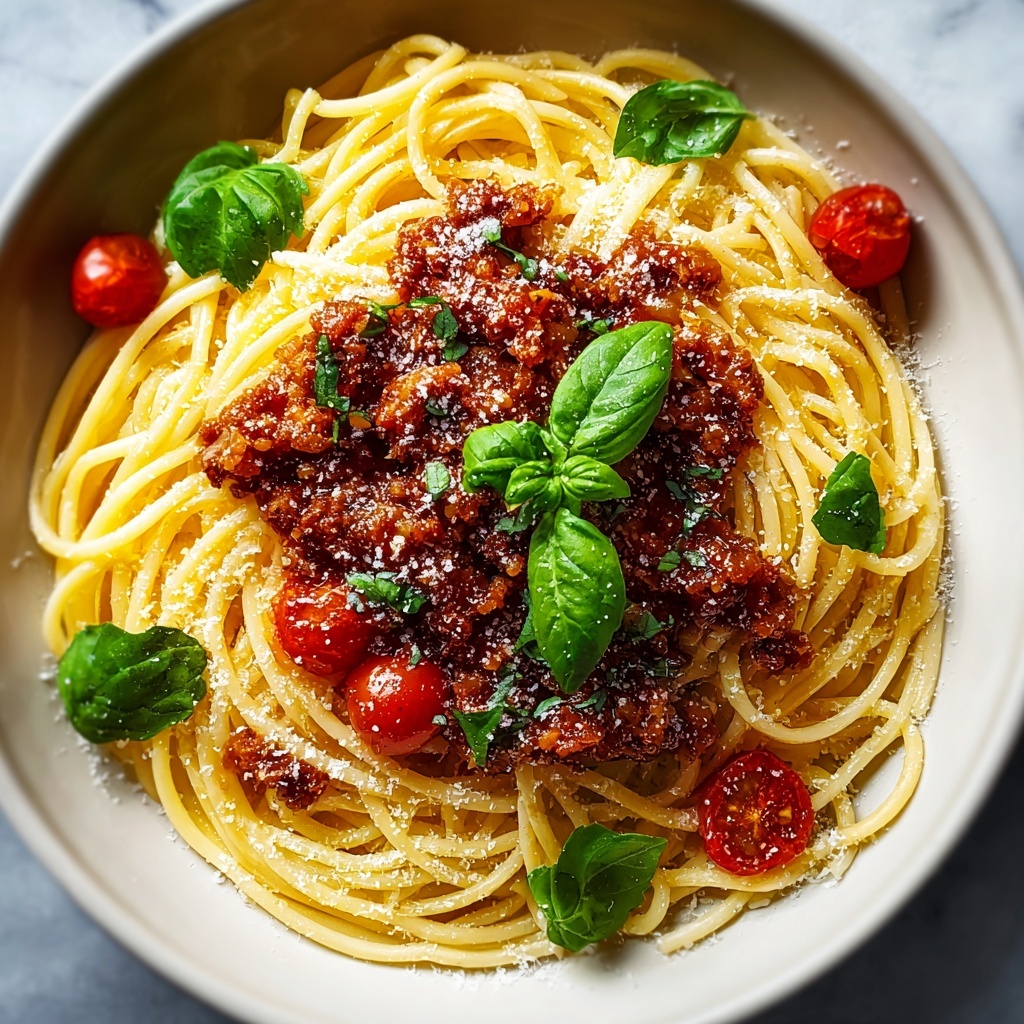
If you’ve ever wished you could capture the heart and soul of a true Italian kitchen right in your own home, this Old School Spaghetti Recipe is exactly what you need. It’s a timeless dish that combines simple pantry staples with bold flavors, creating a comforting, satisfying meal that’s perfect for any occasion. From the rich garlic-infused olive oil to the luscious, slow-simmered tomato sauce, this recipe is a celebration of authentic, old-fashioned spaghetti that never goes out of style.
Ingredients You’ll Need
Every ingredient in this Old School Spaghetti Recipe plays a vital role in creating that magical balance of flavor, texture, and aroma. These basics are easy to find, and each one adds a unique touch that makes the dish truly shine.
- 1 lb (450g) spaghetti: The perfect pasta base that holds the sauce beautifully with just the right bite.
- 1/4 cup extra virgin olive oil: Adds richness and a subtle fruity note, essential for that classic garlic sauté.
- 4 cloves garlic, thinly sliced: Imparts a fragrant, savory depth when gently browned in the olive oil.
- 1/2 tsp red pepper flakes (optional): Gives a gentle kick and warming spice to brighten the sauce if you like a bit of heat.
- 2 cans (28 oz each) whole peeled tomatoes: The heart of this recipe — fresh, tangy, and bursting with sun-ripened flavor.
- Salt and freshly ground black pepper, to taste: Simple seasonings that raise the entire dish.
- 1 tbsp sugar (optional): Balances the acidity of the tomatoes perfectly for a smooth, mellow sauce.
- Fresh basil leaves, for garnish: A fragrant, vibrant finish that adds a pop of herbal brightness.
- Grated Parmesan cheese, for serving: The salty, nutty topping that makes every forkful irresistible.
How to Make Old School Spaghetti Recipe
Step 1: Cook the Spaghetti
Start by bringing a large pot of well-salted water to a rolling boil. Adding salt is critical here because it seasons the pasta internally, enhancing every bite. Drop in the spaghetti and cook it according to the package instructions until it’s al dente, meaning it still has a slight firm texture to the bite. Don’t forget to reserve one cup of the starchy pasta water before draining — this magical liquid is your key to the perfect sauce consistency later on.
Step 2: Infuse Olive Oil with Garlic and Pepper Flakes
While the pasta cooks, heat the extra virgin olive oil in a large skillet over medium heat. Toss in the thinly sliced garlic and optional red pepper flakes. Pay close attention here! You want to sauté the garlic until it turns a lovely golden brown but not burnt, which takes just a few minutes. This step releases a beautiful aroma and flavors the oil, which will be the foundation of your sauce.
Step 3: Prepare the Tomato Sauce
Take those whole peeled tomatoes out of the can and crush them with your hands into a bowl—this hands-on moment connects you with the classic cooking tradition behind the Old School Spaghetti Recipe. Pick out any hard stem bits you might find. Now, pour the crushed tomatoes and their juices into the skillet with your garlic-infused oil. This marriage of ingredients starts building the rich, hearty sauce that makes this dish unforgettable.
Step 4: Season and Simmer
Next, season the sauce generously with salt and freshly ground black pepper. Add the tablespoon of sugar if you’re using it; this helps mellow out the tomato’s natural acidity and rounds out the flavor profile. Let the sauce simmer gently for about 20 minutes, stirring occasionally. During this time, the sauce thickens, intensifies, and the flavors beautifully meld together, giving you that deep, comforting tomato taste characteristic of an authentic Old School Spaghetti Recipe.
Step 5: Combine Pasta and Sauce
Now, add your cooked spaghetti directly into the skillet with the tomato sauce. Toss everything together so that every strand of pasta is lovingly coated with the sauce. If the mix feels too thick or pasty, splash in a bit of the reserved pasta water. This step is magical because the starch in the water helps the sauce cling perfectly to the spaghetti, creating a luscious, silky finish.
Step 6: Let the Flavors Absorb
Allow the spaghetti to cook in the sauce for a couple more minutes. This extra simmer allows the pasta to soak up even more of that garlicky, tomatoey goodness, making each bite bursting with flavor. Take a moment now to taste and adjust seasoning as needed — sometimes a little more salt or pepper can elevate the dish from good to absolutely spectacular.
Step 7: Serve with Style
Your Old School Spaghetti Recipe is now ready to be enjoyed! Serve it hot, sprinkled generously with freshly grated Parmesan cheese and garnished with fragrant basil leaves. These finishing touches not only enhance the flavor but also add a beautiful visual appeal to your dish.
How to Serve Old School Spaghetti Recipe
Garnishes
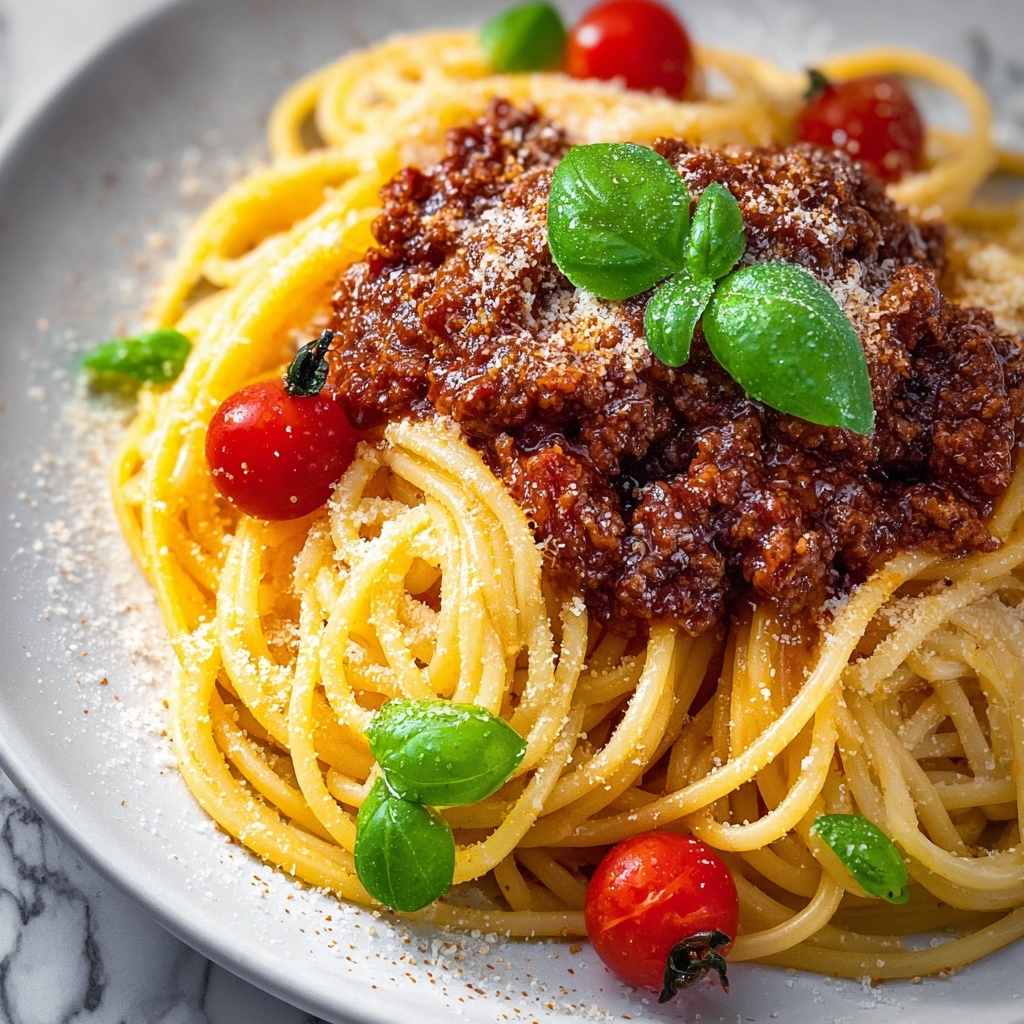
Fresh basil leaves bring a delicate, aromatic brightness that contrasts wonderfully with the rich tomato sauce. Don’t be shy with the grated Parmesan either; it introduces a salty, nutty complexity and a satisfying texture. If you’re feeling adventurous, a drizzle of more extra virgin olive oil before serving adds a silky touch.
Side Dishes
This classic spaghetti pairs beautifully with simple sides that echo its Italian roots. Consider crisp, garlicky bruschetta or a refreshing arugula salad dressed lightly with lemon and olive oil. Warm, crusty bread is another must-have—perfect for soaking up every last bit of that incredible sauce.
Creative Ways to Present
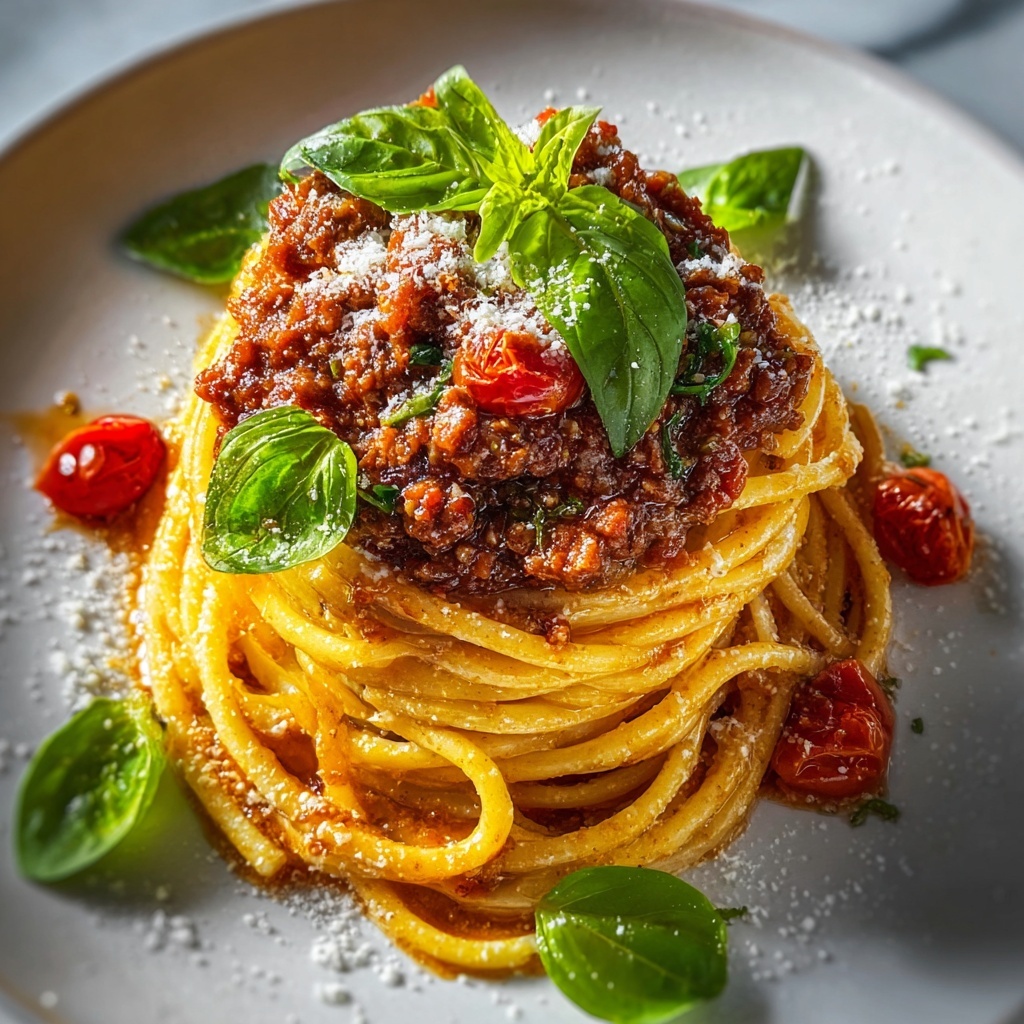
Turn your Old School Spaghetti Recipe into a centerpiece by twirling the pasta into neat little nests on each plate, adding a sprig of basil on top for height and color. For a rustic touch, serve it family-style in a big, beautiful bowl, inviting everyone to dig in and share. Either way, presentation adds extra joy to this simple yet satisfying meal.
Make Ahead and Storage
Storing Leftovers
If you have any leftovers (though they rarely last long!), let the spaghetti cool to room temperature before transferring it to an airtight container. It will keep well in the fridge for up to three days, and the flavors often deepen, making the next meal just as delightful.
Freezing
You can freeze this spaghetti, but to maintain the best texture, it’s ideal to freeze the sauce separately from the pasta if possible. Store the sauce in a freezer-safe container or bag for up to three months. When ready, thaw overnight in the fridge and reheat gently while cooking fresh spaghetti.
Reheating
Reheat your leftovers gently on the stovetop over medium-low heat. Adding a splash of water or olive oil helps refresh the sauce and prevents the pasta from drying out. If you’re in a hurry, microwaving with a damp paper towel over the top works too, but stirring occasionally ensures even warming.
FAQs
Can I use fresh tomatoes instead of canned for this Old School Spaghetti Recipe?
Absolutely! Fresh, ripe tomatoes can be used, but you’ll need to peel and crush them, which takes more time. Canned tomatoes are often picked and canned at their peak ripeness, giving you consistent flavor all year round.
What type of pasta is best for this recipe?
Traditional spaghetti is the classic choice and works perfectly here, but feel free to experiment with other long pasta like linguine or fettuccine. Just keep cooking times in mind to maintain that ideal al dente texture.
Is the red pepper flakes step necessary?
Not at all! The red pepper flakes add a hint of heat and complexity, but if you prefer a milder sauce, simply omit them. This recipe is quite flexible and can easily be tailored to your spice preference.
Why do I need to reserve pasta water?
Starchy pasta water is liquid gold in Italian cooking. It helps thin out thick sauce and allows it to adhere beautifully to the noodles, creating a silky and cohesive dish rather than something dry or clumpy.
How do I prevent garlic from burning when sautéing?
Keep your heat at medium or medium-low and stir frequently. Garlic burns quickly and will turn bitter, so the moment it reaches golden brown, it’s time to add the next ingredients. Patience and attention here make all the difference.
Final Thoughts
This Old School Spaghetti Recipe is more than just pasta on a plate — it’s a delicious journey back to simple, heartfelt cooking that warms your soul. With its straightforward ingredients and easy steps, it’s a go-to meal that never disappoints. I can’t wait for you to try it and make it your own family favorite as well!
Print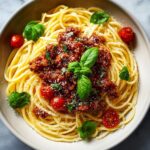
Old School Spaghetti Recipe
- Prep Time: 0h 15m
- Cook Time: 0h 30m
- Total Time: 0h 45m
- Yield: 4 servings
- Category: Main Course
- Method: Stovetop
- Cuisine: Italian
- Diet: Vegetarian
Description
This classic Old School Spaghetti recipe features al dente spaghetti tossed in a flavorful homemade tomato sauce with garlic, olive oil, and hints of red pepper flakes. The sauce is slow-simmered to develop rich flavors, then combined with pasta and garnished with fresh basil and Parmesan cheese, creating a comforting and timeless Italian dish perfect for any occasion.
Ingredients
Pasta
- 1 lb (450g) spaghetti
Sauce
- 1/4 cup extra virgin olive oil
- 4 cloves garlic, thinly sliced
- 1/2 tsp red pepper flakes (optional)
- 2 cans (28 oz each) whole peeled tomatoes
- Salt and freshly ground black pepper, to taste
- 1 tbsp sugar (optional)
Garnish
- Fresh basil leaves, for garnish
- Grated Parmesan cheese, for serving
Instructions
- Cook the spaghetti: Bring a large pot of salted water to a boil. Add the spaghetti and cook according to package instructions until al dente. Reserve 1 cup of pasta water, then drain and set aside.
- Prepare the garlic and chili oil: In a large skillet, heat the olive oil over medium heat. Add the sliced garlic and red pepper flakes (if using). Sauté until the garlic is golden brown and fragrant, being careful not to burn it.
- Crush the tomatoes: Crush the canned whole peeled tomatoes in a bowl using your hands, removing any tough stem ends. Add the crushed tomatoes and their juices to the skillet with the garlic oil.
- Simmer the sauce: Season the sauce generously with salt, freshly ground black pepper, and sugar (if using) to balance the acidity. Simmer the sauce for about 20 minutes, stirring occasionally, until it thickens and flavors meld together.
- Toss pasta with sauce: Add the cooked spaghetti to the skillet with the tomato sauce and toss to coat evenly. If the sauce seems too thick, add a little of the reserved pasta water to loosen it and help it cling to the noodles.
- Finish cooking: Cook the spaghetti in the sauce for another 2 minutes to absorb the flavors. Adjust seasoning as necessary with additional salt or pepper.
- Serve: Plate the spaghetti hot, garnished with fresh basil leaves and a generous sprinkle of grated Parmesan cheese for a delicious finish.
Notes
- For a spicier dish, increase the red pepper flakes to taste or add a pinch of crushed chili flakes.
- If you prefer a smoother sauce, you can blend the crushed tomatoes before adding them to the skillet.
- Reserved pasta water is key for adjusting the sauce consistency and helping it stick to the spaghetti.
- Use fresh, high-quality whole peeled tomatoes for the best flavor.
- Parmesan cheese adds a savory depth, but can be omitted for a vegetarian-friendly option.